
網誌文章:提升中文英文水平的學習資源
精選文章

Playgroup有什麼類型?如何選擇適合的Playgroup?Playgroup價錢多少?
小朋友應該參加playgroup嗎?如何選擇playgroup?有什麼推介的playgroup?讓幼稚園的幼童參加Playgroup是一個值得考慮的選擇,尤其是在香港這樣的雙語環境和競爭激烈的升學背景下。Playgroup不僅能幫助幼童提升社交、語言和認知能力,還能為小學入學(如小一面試)奠定基礎。以下將詳細解答幼童是否應該參加Playgroup、Playgroup的類型以及如何選擇合適的課程,結合香港的實際情況。

小一面試班有沒有用?如何選擇適合的小一面試班?費用多少?
香港的小一面試班(Primary One interview classes)旨在幫助幼稚園學生(約4-6歲)準備小學入學面試,特別是針對競爭激烈的名校或國際學校。這些面試班通常教授面試技巧、語言表達、社交互動和常見問題的應對方法,例如看圖說故事、圖片描述、團體活動等。以下是關於小一面試班是否有效用的分析,以及它們的優缺點、一般費用及價錢和應注意的事項。

小一面試家長問題:說說你孩子的優點和缺點|該如何回答?
在小一面試中,學校問家長「小孩有什麼優點和缺點?」的目的是了解家長對孩子的認識、育兒理念以及家庭與學校價值觀是否契合。回答時應真誠、具體並展現對孩子的理解,同時避免過分誇張或負面印象。下面會說說,應該如何處理這類問題。

What Is the Simon Learning Method? The '6 Months to Master Anything' Idea, and How Students Can Use It
The Simon learning method — from Nobel laureate Herbert Simon — claims that with real focus, anyone with some background can master a subject in about six months. This article explains the chunk theory behind it, the three rules it boils down to, how primary and secondary students can scale it down to a term or a topic, and where it doesn't apply.

A Weekly Spelling Test Routine: 10 Minutes a Day, No Thursday-Night Panic
If spelling practice happens once a week, the night before the test, in tears, this is the fix. A Monday-to-Friday routine of ten minutes a day that fits around work and after-school activities, works for English and Chinese dictation alike, and lets your child do most of it alone.
Sight Words vs Phonics: Which Spelling Words to Sound Out and Which to Memorise
Some words on the spelling list can be sounded out; others — the sight words or tricky words — simply have to be learned by heart. Treating them the same way is why a child who is good at phonics still writes 'sed' for 'said'. This guide explains the difference, how to tell which is which on any list, and the right practice method for each.
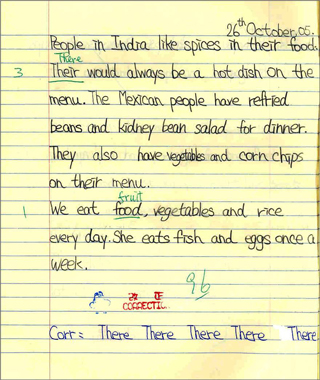
6 Ways to Learn Spelling Words That Actually Stick (Not Just Until Friday)
Copying each spelling word out ten times is hand exercise, not memory training. Here are six methods that help primary-school children really remember spelling words — hear it first, break it into sounds, link it to a picture, see it around the house, revise before forgetting, and use it in a sentence — so the words survive past the test.
Your Child's First Spelling Test in Year 1: A Parent's Guide
The first spelling test (or dictation) usually arrives a few weeks into Year 1, and it tends to worry parents more than children. This guide explains what a first spelling test actually covers, answers the three questions parents ask most, and gives a four-step preparation plan from the day the word list comes home to the night before.

The Ebbinghaus Forgetting Curve: How to Learn Spelling Words Without Forgetting Them a Week Later
Your child learns the spelling list, scores well on Friday, and has forgotten the words by the following Monday. It isn't laziness — it's the forgetting curve. This article explains what Ebbinghaus discovered, how to revise 'just before you forget' (spaced repetition), and gives a ready-to-use revision timetable for spelling words and vocabulary.
Helping Your Child with Chinese Dictation When You Don't Read Chinese
Your child has a Chinese dictation (默書) every week and you can't read the passage, let alone read it aloud in Cantonese or Putonghua. You can still help — and the part you can do is the part that matters most. A practical guide for non-Chinese-speaking and English-speaking parents in Hong Kong and Singapore.
The 8 Most Common Spelling Test Mistakes in Primary School (and How to Fix Each One)
Children lose marks in spelling tests and dictations in the same few places every week: digraphs, silent letters, double consonants, homophones, suffixes, tricky words, punctuation and skipped words. Here are the eight most common mistakes from Year 1 to Year 6, with a concrete way to fix each one at home.
西蒙学习法是什么?6个月精通一门学问的原理,以及中小学生怎么用
西蒙学习法由诺贝尔奖得主赫伯特·西蒙提出:一门学问约5万个知识组块,集中连续地学,6个月就能掌握。这篇文章解释它的原理和三条核心规则(目标单一、连续投入、主动理解),并说明中小学生怎样把它缩小到一个学期、一个单元来用,以及它不适合什么情况。