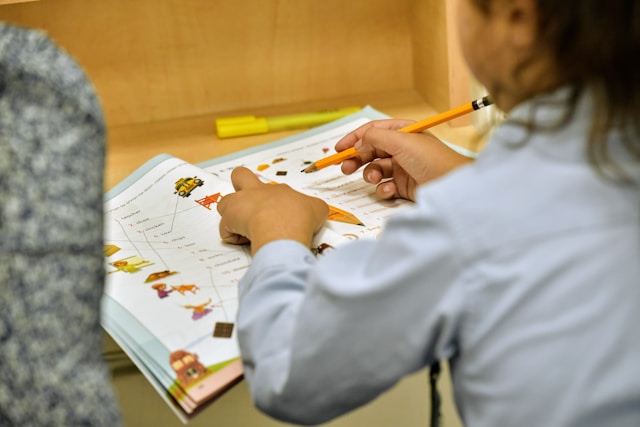
How to Help Your Child Practise Dictation at Home (Without the Tears)
Dictation tests are a fixture of primary school life — and for many families, the night before a dictation can feel stressful. Your child is anxious, you're not sure how to help, and it often ends in tears (theirs or yours).
It doesn't have to be this way. With a simple routine and the right approach, dictation practice can become calm, consistent, and actually effective.
Why home practice matters
At school, teachers read out words or sentences once and pupils write them down. There's no rewind, no second chance. If your child hasn't heard the words enough times at home, the test will feel unfamiliar and rushed.
The goal of home practice is to make the test format feel normal — so your child can focus on remembering, not panicking.
Step 1: Start early, not the night before
The most common mistake is waiting until the eve of the test. By then, there's too much to cover and not enough time for the words to stick.
A better approach: As soon as the dictation list arrives, split the words into small groups and practice a little each day. Even 10 minutes a day for 3–4 days is far more effective than one long cramming session.
Step 2: Listen first, write second
Before your child tries to write anything, they need to hear the words — ideally with correct pronunciation.
If you're not confident in your own English pronunciation, use DictationEasy. Enter or photograph the word list, and the app reads each word or sentence aloud in clear, standard English. Your child listens, then writes — just like in the actual test.
This is especially useful for Hong Kong families where English may not be the home language.
Step 3: Cover, write, check — don't just copy
Copying from the word list is not the same as practising for dictation. Your child needs to retrieve the words from memory, not just trace them visually.
The most effective method:
- Look at the word
- Cover it
- Write it from memory
- Uncover and check
Repeat any words that were wrong. This simple method activates memory far more effectively than passive copying.
Step 4: Simulate the real test
A few days before the dictation, do a full run-through:
- Put the word list face-down
- Play DictationEasy (or read aloud if you're comfortable)
- Your child writes everything without looking
- Check together and note any errors
This reveals exactly which words need more work — and also builds confidence by showing your child what they already know.
Step 5: Focus the final evening on weak spots only
If your child has been practising throughout the week, the night before the test should be light:
- Quick run-through of the full list
- Extra attention on any words still causing trouble
- Early bedtime — sleep helps consolidate memory
Avoid late-night cramming. A rested brain performs much better than an exhausted one.
What if your English isn't strong enough to help?
Many parents in Hong Kong worry about this. You might not be sure of the pronunciation, or you may not be able to read sentences fluently.
DictationEasy was designed with exactly this in mind. You don't need to say a single English word. Just set up the list, hand the phone to your child, and the app does the reading. You can check their answers afterwards by comparing to the word list — no English required.
Summary
- Start practising a few days before the test, not the night before
- Use listening + writing practice, not just copying
- Simulate the real test format with a full mock run
- Use DictationEasy if your pronunciation isn't confident
- Keep the final evening light — rest matters too
DictationEasy is free to download on the App Store. Paid users unlock Teacher Mode, which lets children practise completely independently.